
Learner Lesson 8: How Do Solar Systems Work?
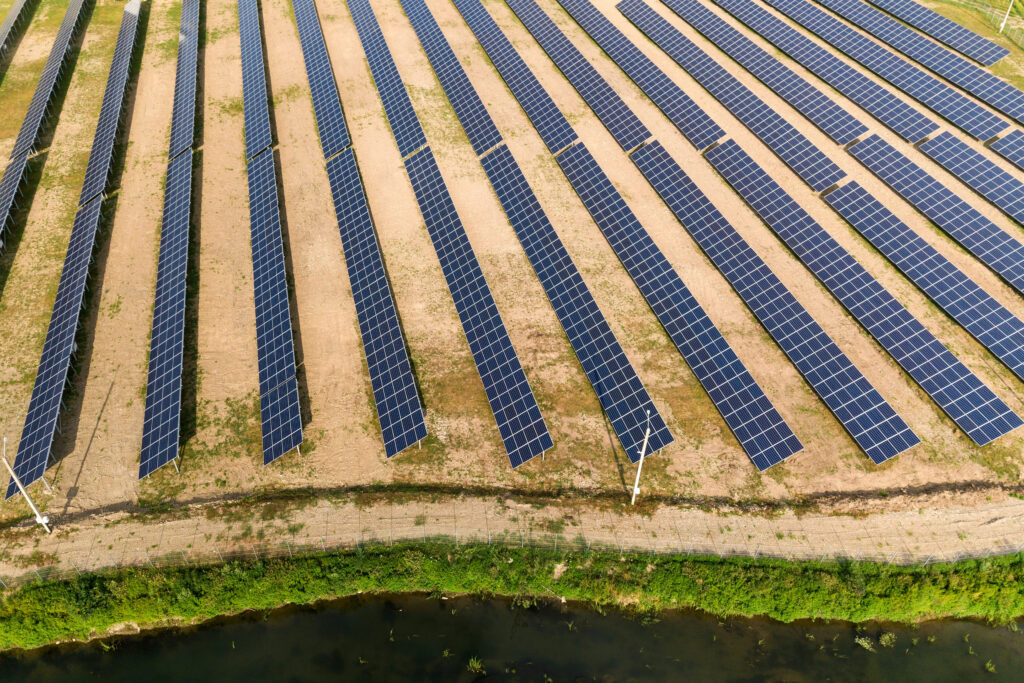
Lesson Overview
In earlier lessons, you learned that solar cells and panels make electricity and that engineers compare panel specifications to estimate how much energy a mini‑grid can supply over a day. You also built load profiles and daily supply tables to see whether a solar system design could meet the needs of a clinic or school.
In this lesson, you will zoom out from a single panel or load profile to a complete solar energy system. A complete system includes panels, a charge controller, batteries, an inverter, loads, and sometimes a generator. You will compare a simple circuit to a DC‑coupled solar system, learn what job each component does, and read inverter and battery specification sheets to check whether components work together safely and meet different community needs. Finally, you will choose a context, recommend an inverter–battery pair, and explain at least one trade‑off that makes sense for that community.
Questions You Will Be Able to Answer by the End of This Lesson
- How is a solar energy system similar to and different from a basic electrical circuit?
- What jobs do panels, charge controllers, batteries, inverters, loads, and generators each do?
- How do engineers use inverter and battery specifications to check compatibility and make design decisions?
- Why is a technically compatible inverter-battery pair not always the “best” choice for every community?
Key Vocabulary and Concepts
|
Term |
Definition |
|---|---|
|
Basic circuit |
A simple loop with a source, conductors, load, and return path that allows current to flow safely. |
|
DC-coupled solar system |
A system where panels and batteries are connected on the DC side (through a charge controller), and an inverter converts DC to AC for loads. |
|
Photovoltaic panel or module 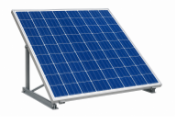 |
A group of photovoltaic cells wired together and packaged for outdoor use. |
|
Charge controller 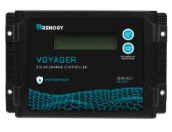 |
An electronic device that regulates the voltage and current flowing from solar panels to a battery bank so the batteries charge safely and are not overcharged. |
|
Battery bank 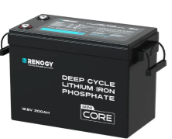 |
A group of one or more connected rechargeable batteries that stores electrical energy for later use. In a solar system, it provides DC electricity when solar panels are producing less power than the loads need, such as at night or during cloudy weather. |
|
Inverter 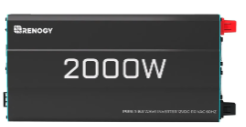 |
Device that converts DC power from panels/batteries into AC power at a specific voltage and frequency for standard loads. |
|
Generator (backup source) |
Optional AC or DC source used to charge batteries or support loads when solar and storage are insufficient. |
|
Inverter parameters |
Data such as input DC voltage range, output AC voltage and frequency, efficiency, rated power, surge rating, and warranty period. |