
Learner Lesson 3: Measuring Power & Energy
Lesson Overview
In this lesson, you will learn how engineers measure and describe the electrical energy used by a circuit. It is not enough to know that a circuit turns on. Engineers need to know how the circuit works, how much electrical energy is being transferred, and how changes to the circuit affect performance.
You will build a simple LED circuit, use a multimeter to measure voltage and current, and use those measurements to calculate power and energy. These ideas are important for designing larger energy systems, including solar-powered systems and mini-grids.
Questions You Will Be Able to Answer by the End of This Lesson
- How do engineers know how much power a device uses?
- Why do we measure both voltage and current?
- How does changing one circuit variable affect power and energy use?
Key Vocabulary and Concepts
|
Term |
Definition |
|---|---|
|
Energy |
Power used over time. Measured in watt-hours (Wh). 1,000 Wh = 1 kilowatt-hour (kWh). It is calculated using the formula E = P x t. |
|
Direct Current (DC) |
Charge flows in one direction; batteries and solar panels provide DC electricity, and classroom battery circuits are examples of DC circuits. |
|
Alternating Current (AC) |
Charge changes direction periodically; wall outlets and many household electrical systems provide AC electricity, where voltage rises, falls, reverses direction, and repeats. |
|
Multimeter |
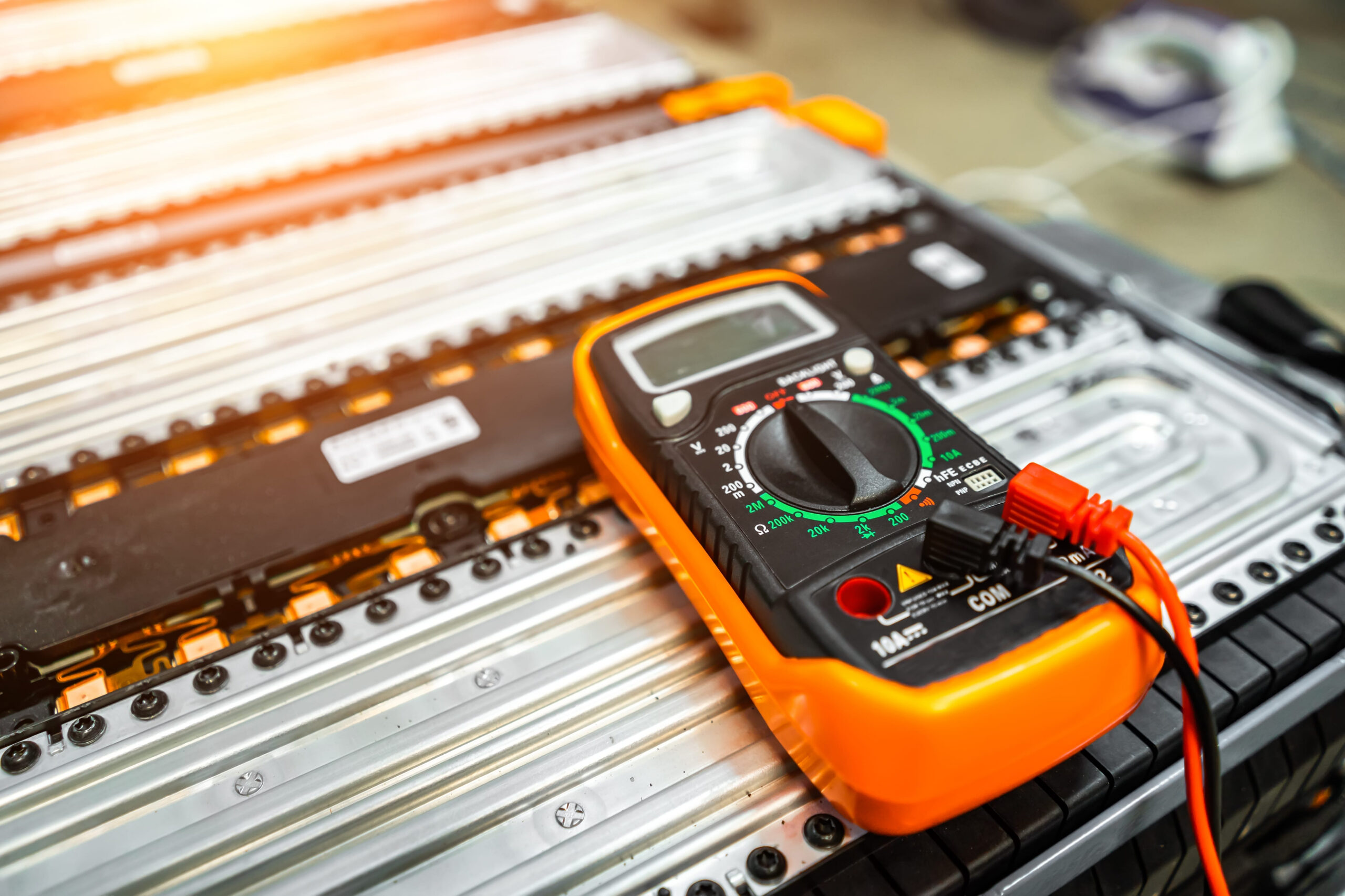
An engineering tool used to measure different electrical quantities in a circuit, such as voltage, current, and resistance; in this lesson, it is used to measure voltage and current. |
|
Breadboard |
A tool for building temporary circuits without soldering; inside the breadboard, groups of holes are connected by metal strips that organize circuit connections into rows and power rails. |
|
LED |
A light-emitting diode used in the circuit; it uses electrical energy to produce light and has polarity, so it must face the correct direction to light. |
|
Resistor |
A component that limits current and protects the LED in the circuit; changing the resistor value changes current and therefore affects power and energy use. |