
Lesson 3 – L: Launch Your Learning: Measuring Power & Energy
L: Launch Your Learning
Build the Circuit and Collect Measurements
Building the LED Circuit
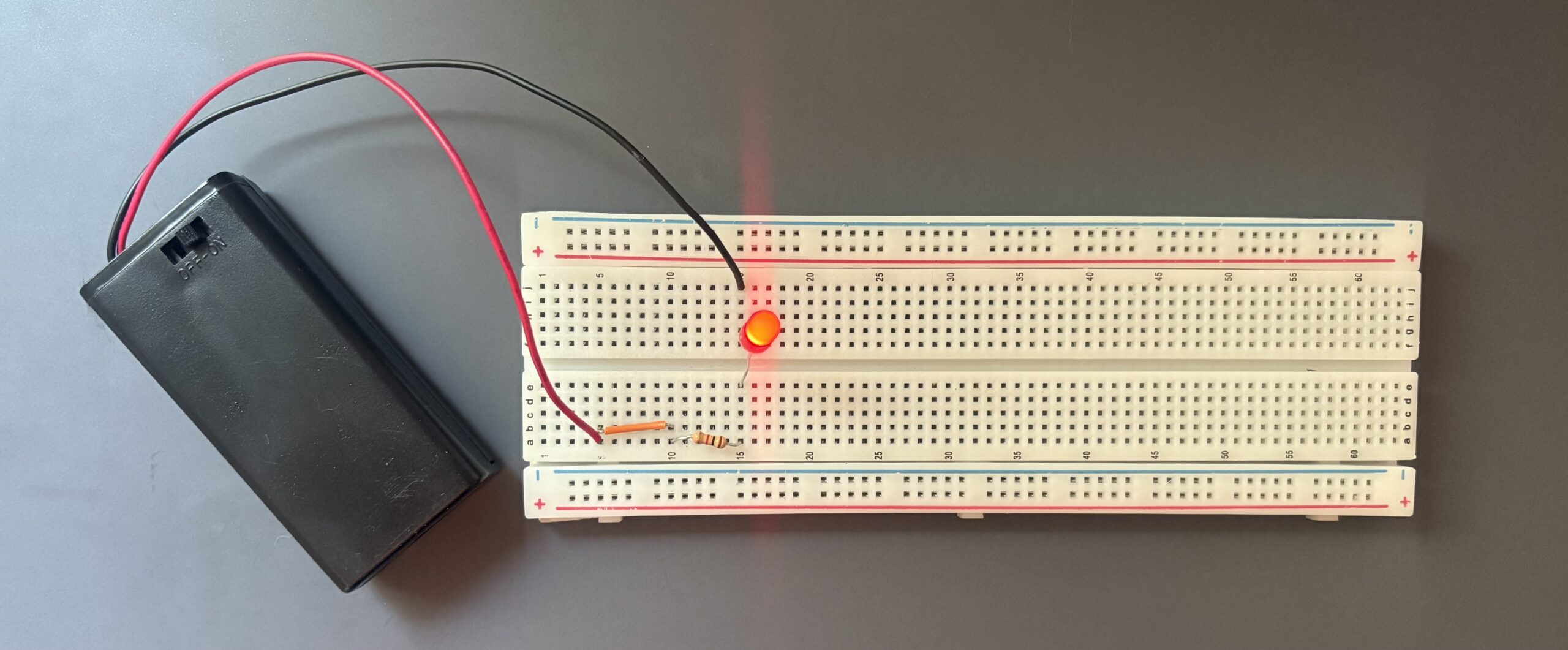
The circuit you will build has four main parts: a battery, a resistor, an LED, and wires. The battery provides electrical energy. The resistor limits current. The LED uses electrical energy to produce light. The wires and breadboard create the path that connects everything.
The circuit path is battery → resistor → LED → back to battery. This path must be complete for current to flow. The LED also has polarity, which means it must face the correct direction. If the LED is reversed, it may not light even if the rest of the circuit is connected.
|
Part |
Role In the Circuit |
|---|---|
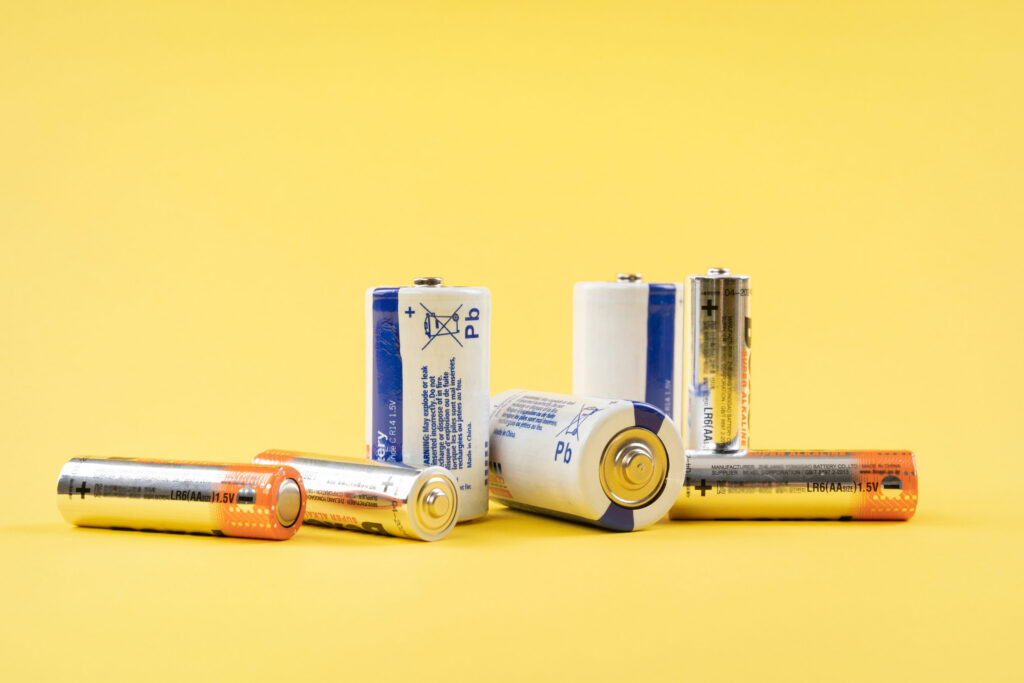 |
Provides the electrical energy and voltage for the circuit. |
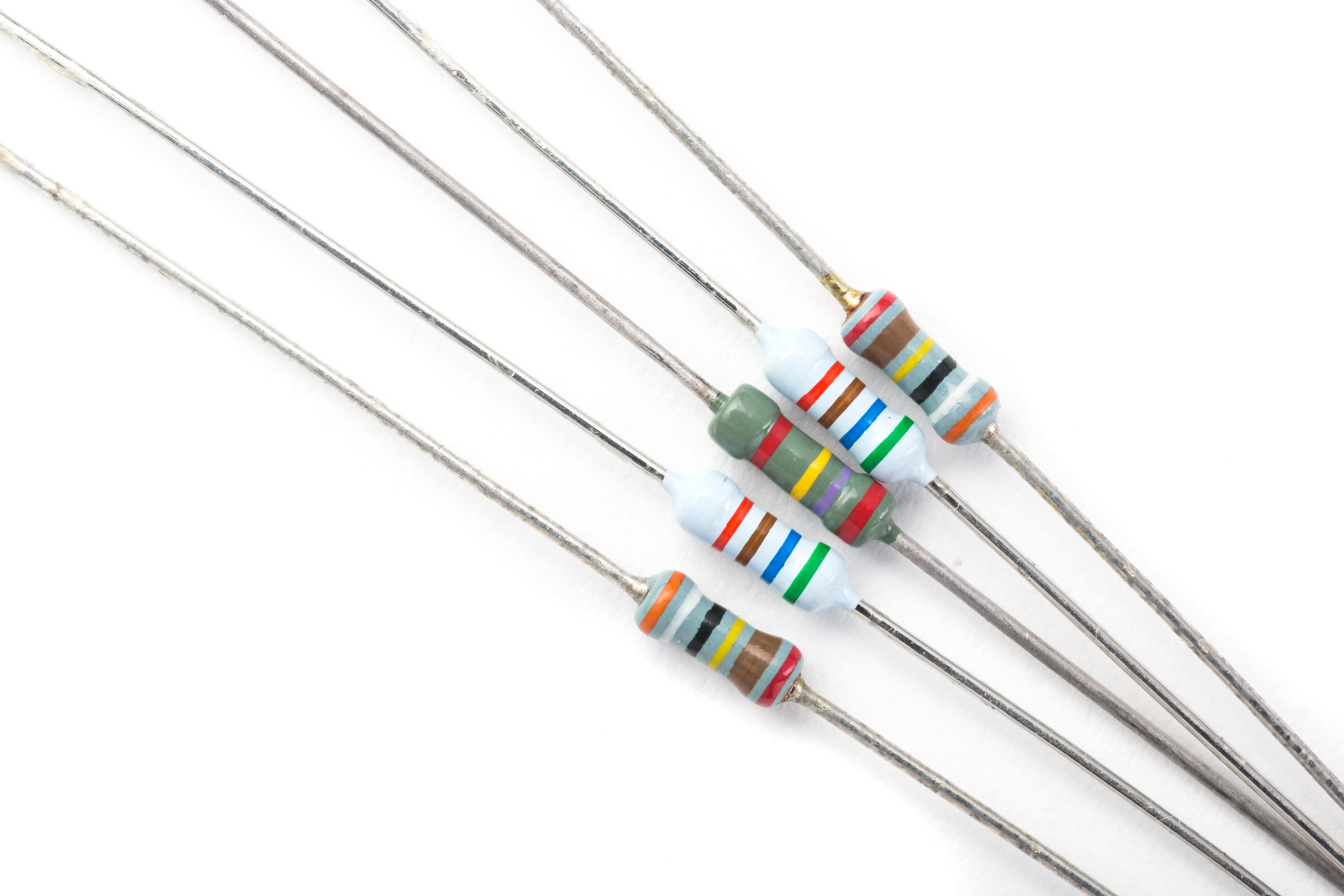 |
Limits current and protects the LED. |
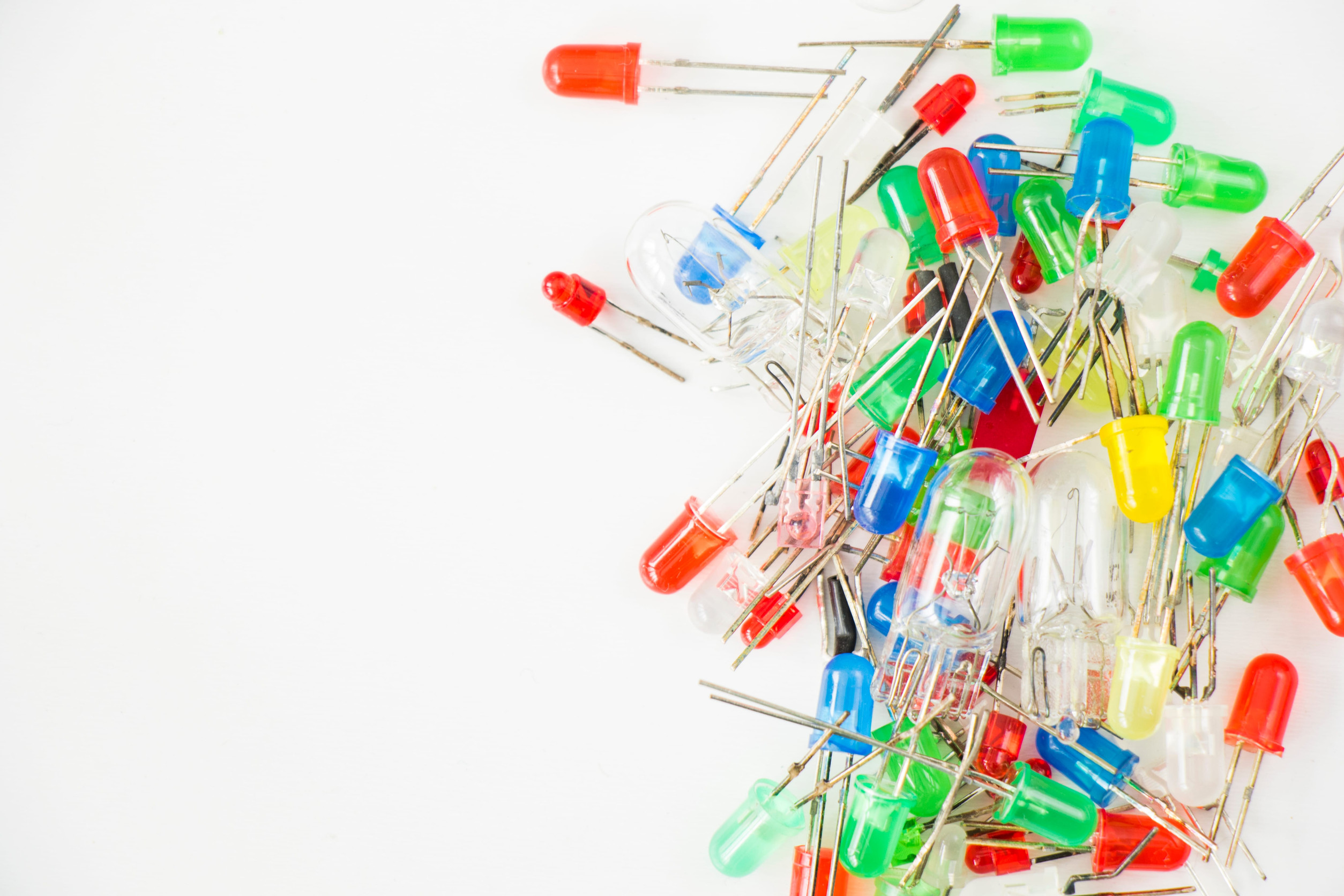 |
Uses electrical energy to produce light. |
|
Wires and breadboard |
Create a complete path for current to flow. |
Measuring Voltage
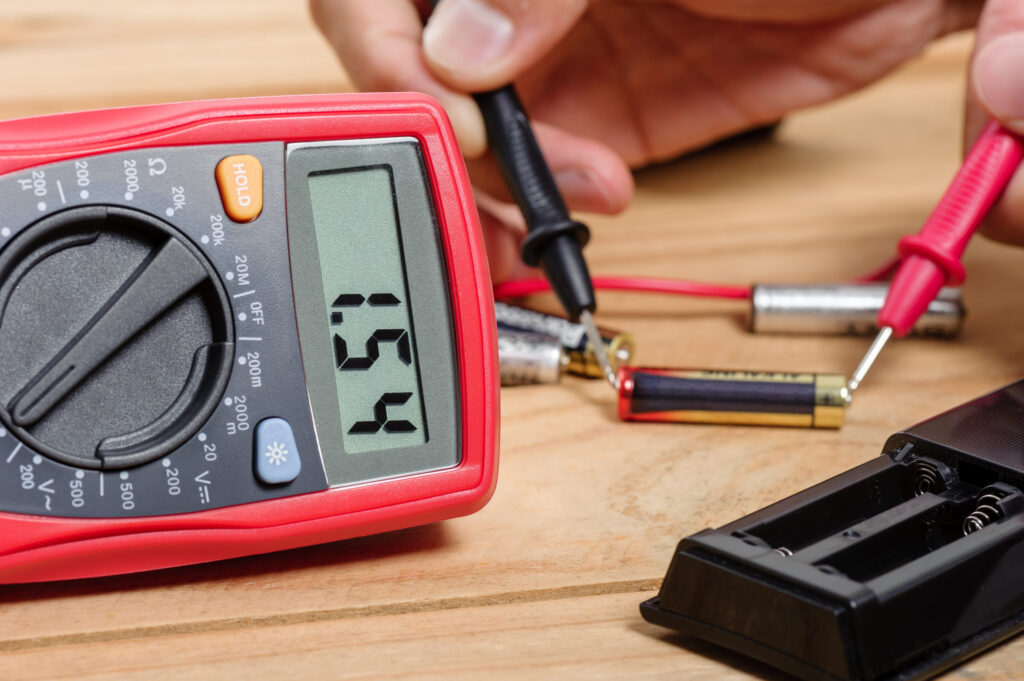
Voltage is measured across a component. To measure voltage across a part in a circuit, set the multimeter to DC volts. Touch one probe to one side of the part, such as a resistor or light, and touch the other probe to the other side. This tells you how much electrical push is used by that part. Keep the circuit connected while you measure, and make sure the meter is set to measure voltage before you begin.
Think About It
Where do you place the probes to measure voltage? Why?
Measuring Current
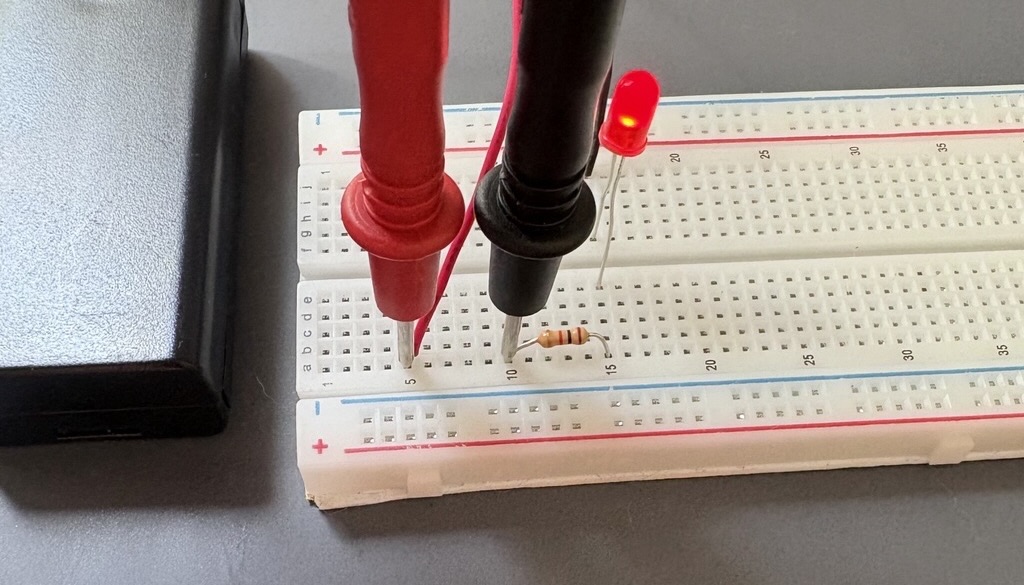
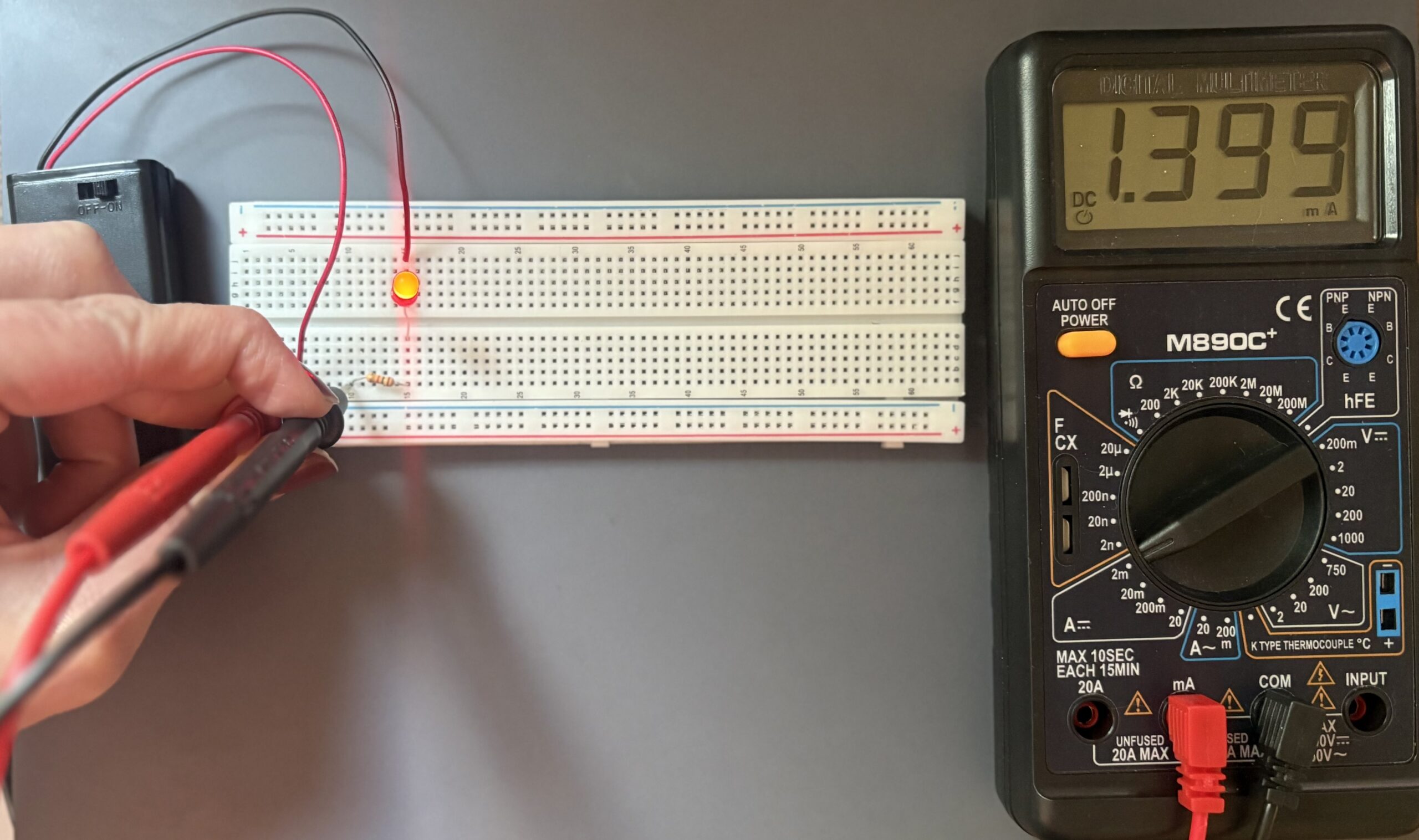
Current is measured differently. To measure current, the meter must be placed in the path of the moving charge. This means you break the circuit and insert the meter in series. In a series connection, the same current that flows through the circuit also flows through the meter.
If you try to measure current the same way you measure voltage, the reading may be wrong and the meter or circuit could be damaged. Always follow your instructor’s directions when measuring current.
Think About It
Where do you place the multimeter to measure current? Why?
Calculating Power and Energy
Once you have measured voltage and current, you can calculate power. Power describes how quickly electrical energy is being transferred or used. The formula is P = V × I.
For example, if a circuit has a measured voltage of 3 V and a current of 0.02 A, the power is 0.06 W because 3 × 0.02 = 0.06. The unit for power is the watt.
Energy connects power to time. If the same circuit runs for 2 hours, you can calculate energy using E = P × t. If the power is 0.06 W and the time is 2 hours, then the energy is 0.12 Wh.
|
Resistor (Ω) |
Measured Voltage (V) |
Measured Current (A) |
Calculated Power (W) |
Calculated Energy (Wh) |
|---|---|---|---|---|
|
10 |
3.00 |
0.0200 |
|
|
|
220 |
3.00 |
0.0100 |
|
|
|
10,000 |
3.00 |
0.0003 |
|
|
Why This Matters
A circuit that works is not automatically a good design. Engineers need to know how much power it uses and how much energy it would use over time.