
Lesson 6 – O: Orient Your Learning: How Do We Build and Use Photovoltaic Panels?
O: Orient Your Learning
What You Already Know, Scaled Up to a Full Panel
You already know that a solar cell produces voltage and current, and that power can be calculated using:
P = V x I
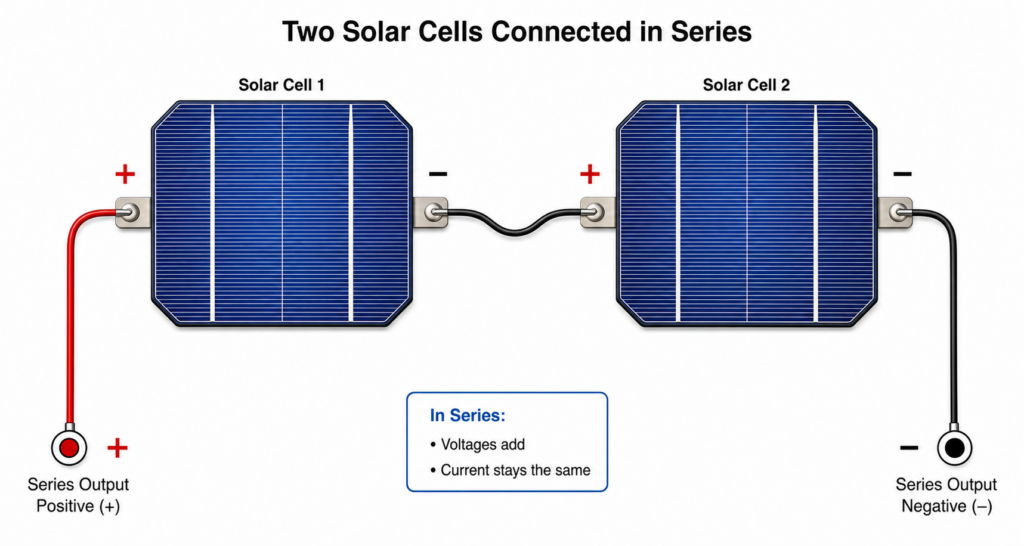
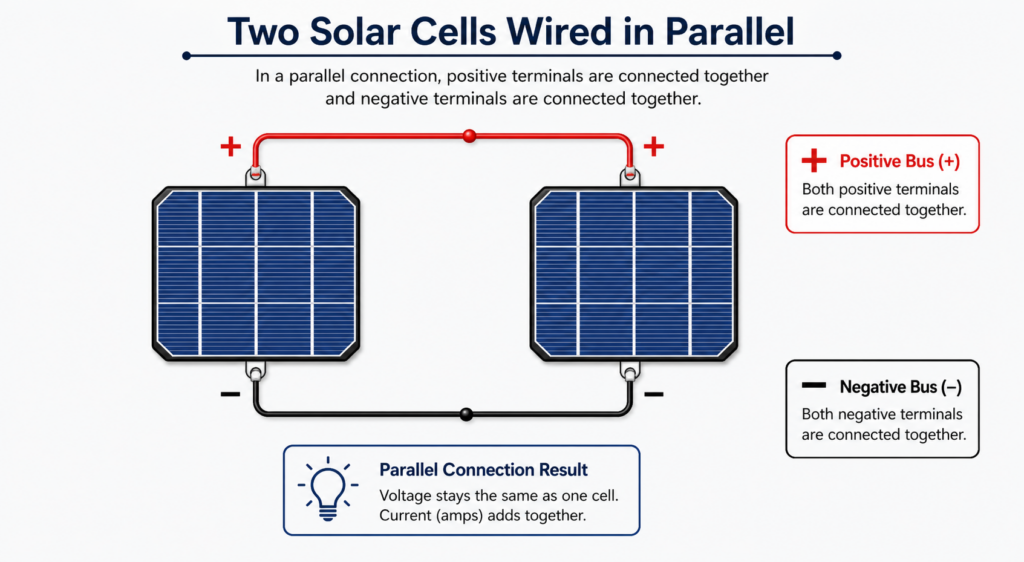
A photovoltaic panel is built by connecting many solar cells together. The way the cells are connected changes the panel’s electrical output.
Series and Parallel Connections
In a series connection, the voltages of the cells add together. The current stays about the same.
In a parallel connection, the currents of the cells add together. The voltage stays about the same.
This means engineers can design panels to produce the kind of electrical output a system needs.
Example
Suppose one solar cell produces 0.5 volts and 0.2 amps. If you connect two cells together, their output varies based on if they are connected in a series or in parallel.
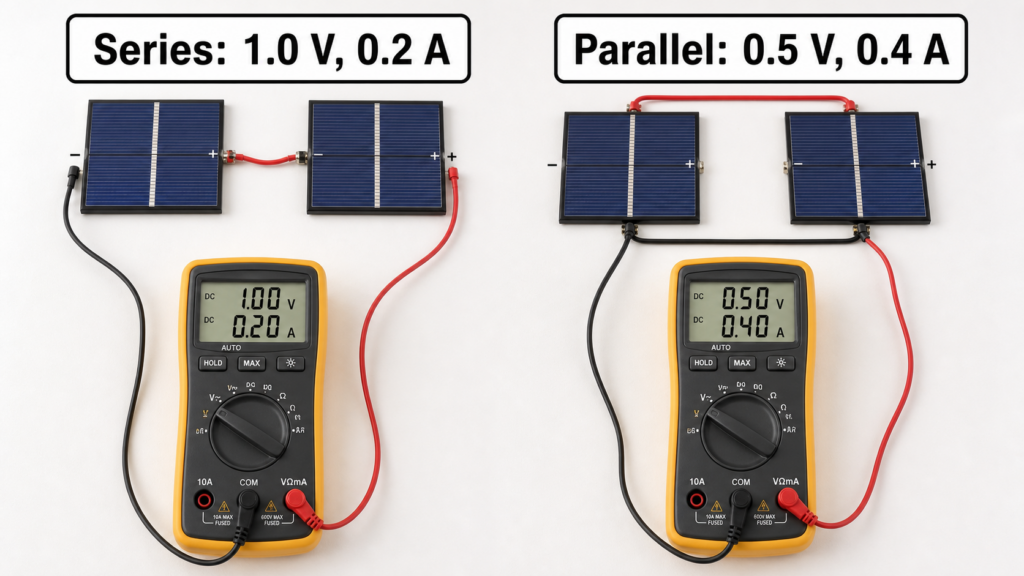
In both cases, power changes because power depends on both voltage and current.
Panel Specifications
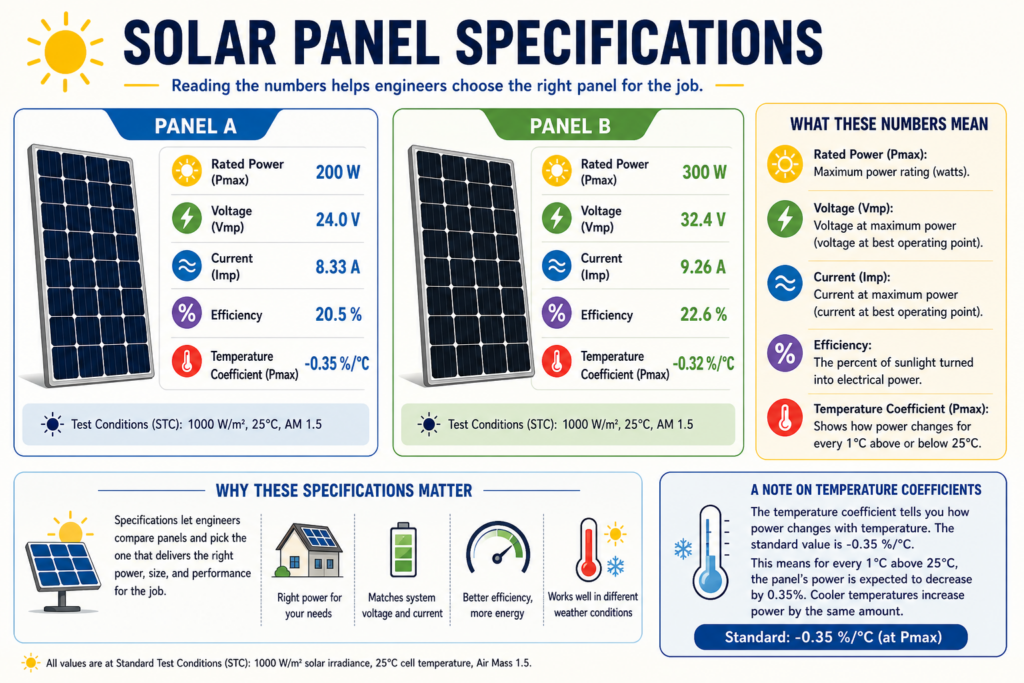
When engineers compare panels, they often look at:
- Rated power: how much power the panel can produce under standard conditions (STC)
- Voltage: how much electrical push the panel provides
- Current: how much charge the panel can deliver
- Module Efficiency: how much sunlight becomes electricity per unit area
- Temperature coefficient: how much panel output changes when the panel gets hotter
Think About It
Why might temperature matter when choosing a panel for a hot location?