
Lesson 2 – L: Launch Your Learning: How Do Electrical Circuits Work Safely?
L: Launch Your Learning
Stakeholders See the Problem in Different Ways
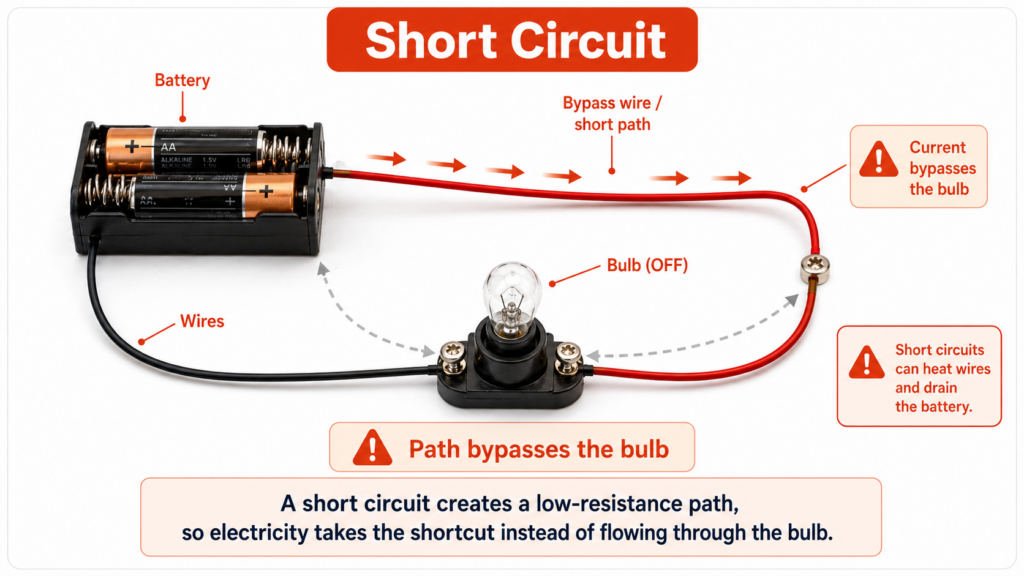
Short Circuit Analysis
In a safe circuit, current moves through a load, such as a bulb. In a short circuit, current bypasses the intended load and follows a low-resistance path. This can allow too much current to flow.
Compare Two Circuits
|
Compare |
Question to Ask |
Safety Evidence |
|---|---|---|
|
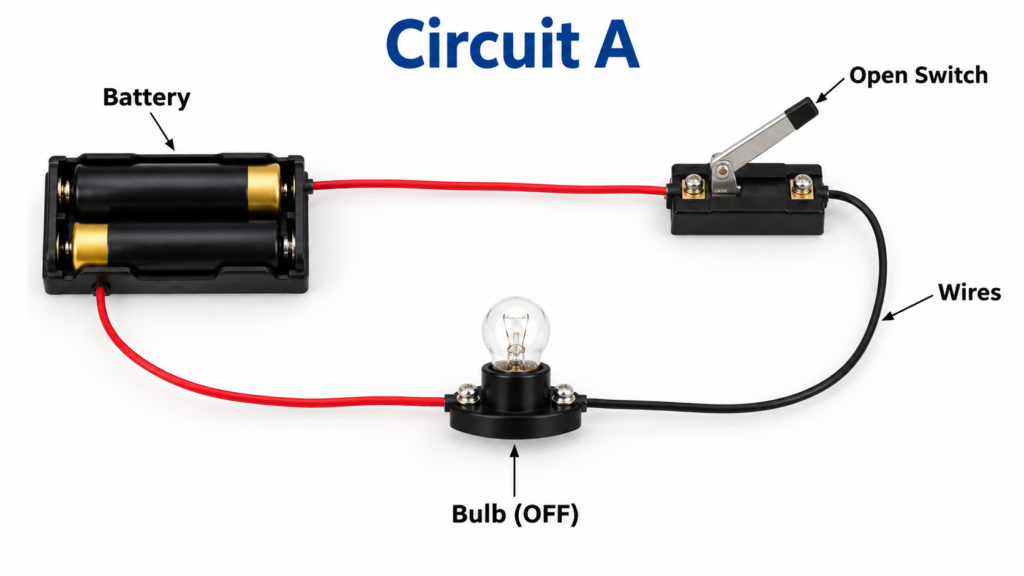
Circuit A |
Which circuit is ready to power on? |
A controlled path through a load is safer. |
|
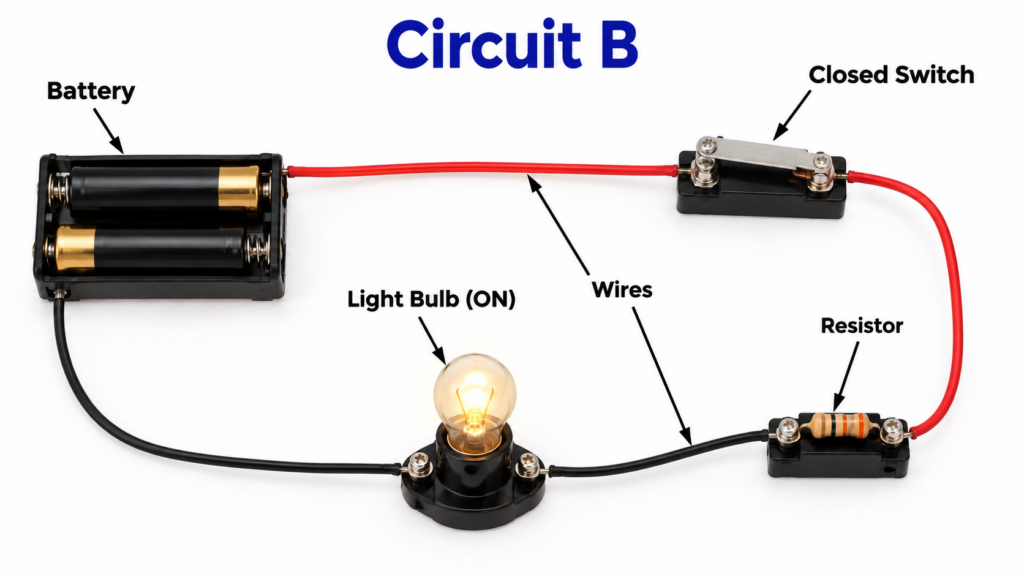
Circuit B |
Which circuit follows the safety rule? |
A low-resistance shortcut can create a short circuit. |
Comparison 1:
Check Your Understanding
Which safety rule applies to a short circuit, and why?
Switch Investigation
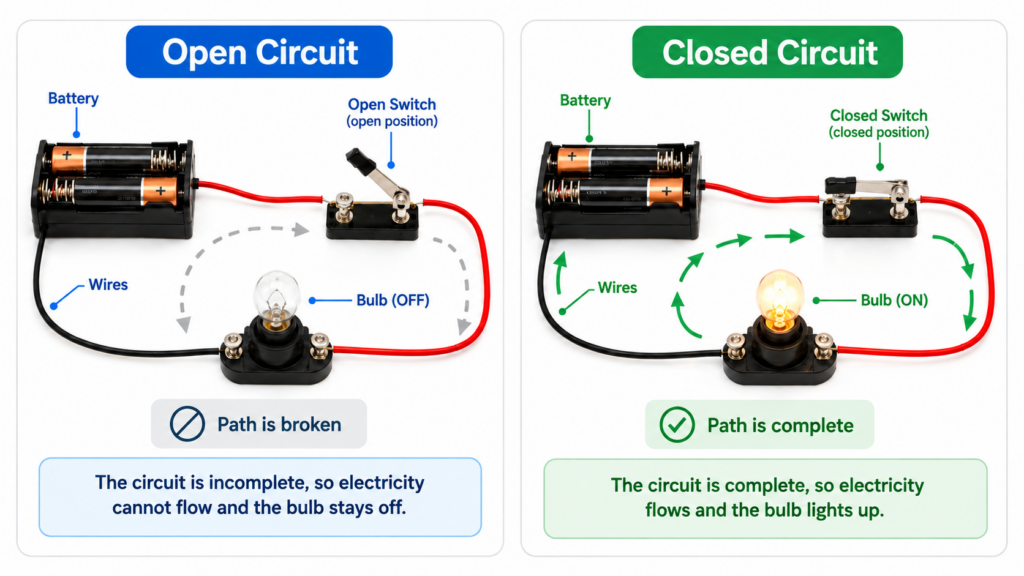
A switch is a control device. When the switch is closed, the path is complete and current can flow. When the switch is open, the path is broken and current stops. This is why switches are used to control when electrical devices turn on or off.
|
Switch Position |
Circuit Type |
What Happens |
|---|---|---|
|
Open switch |
Open circuit |
The path is broken, current stops, and the bulb is off. |
|
Closed switch |
Closed circuit |
The path is complete, current flows, and the bulb lights. |
Think About It
How does a switch help engineers control current?